This repository is under review for potential modification in compliance with Administration directives.
Menu
Standards, Practices, and Quality Assessment
Standards, Practices, and Quality Assessment
Charter
To capture community needs and aggregate standards requirements and specifications, coordinate the implementation of standards, and enable sharing and reuse. The Working Group facilitates transparent benchmarking, quality control, standards compliance, and efficient dissemination of data and supporting artifacts by promoting open-source and collaborative development of best practices and norms in adopting standards.
Overview
The Bridge2AI Standards, Practices, and Quality Assessment Working Group develops and operationalizes community-driven standards to support data collection, deposition, quality assurance, query, dissemination, and integration across Bridge2AI Grand Challenges.
Our goal is to ensure that standards used across projects:
are generalizable across biomedical and behavioral applications, beyond Bridge2AI
produce reproducible, credible outputs useful to the broader scientific community
are updated efficiently and with clear provenance
enable transparent benchmarking and measurable quality assessment
support responsible, trustworthy, and well-documented AI readiness
We achieve this by capturing community needs, aggregating standards requirements and specifications, coordinating implementation, and enabling sharing and reuse across the consortium and beyond.
We develop and refine core schemas, including frameworks such as Datasheets for Datasets, and evaluate metadata conformance across projects. A central component of this effort includes defining and assessing “AI readiness” from a standards perspective to ensure datasets are structured, documented, and governed appropriately for responsible AI use.
2. Tools & Infrastructure for Standards
We design and maintain user-facing and backend infrastructure to operationalize standards. This includes:
Interactive user interfaces such as the Standards Explorer
Integrated file structures to promote consistency
Registries to support efficient standards management
3. Guidelines & Recommendations
We create best practices and recommendations for:
Data documentation
Metadata completeness
Genomics data capture
Medical imaging data
Survey data
Defining and operationalizing AI readiness
These guidelines support consistent, high-quality data preparation and foster reproducibility and interoperability.
4. Working Group Collaboration & Coordination
Continuous engagement is central to our approach. We coordinate with other Bridge2AI Working Groups, external partners, and stakeholders to align goals, refine recommendations, and foster cross-consortium partnerships.
5. Specific Data Type & Use Case Standardization
We focus on harmonizing standards for high-priority data types such as clinical imaging, genomics, and other consortium-relevant modalities. This includes maintaining inventories and catalogs of standards, validation rules, and use cases to promote cross-project consistency and reuse.
6. Documentation & Integration
We publish best practices and ensure integration with relevant platforms, including Common Fund Data Ecosystem (CFDE), to facilitate broader dissemination and adoption. Documentation is maintained to ensure accessibility, transparency, and traceability of the evolution of standards.
How we work
Our approach emphasizes:
Community-driven standards development
Open-source and collaborative workflows
Modality-agnostic and extensible standards specifications
Transparent benchmarking and quality control
Efficient dissemination of data and supporting artifacts
Through structured governance, technical infrastructure, and sustained community engagement, the Standards, Practices, and Quality Assessment Working Group ensures that Bridge2AI standards are practical, measurable, adaptable, and impactful across biomedical and behavioral research domains.
Who We Are
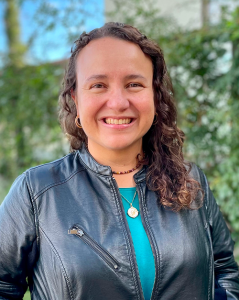
Mónica Muñoz Torres, PhD
Contact Principal Investigator, Chair Standards WG University of Colorado Anschutz Medical Campus
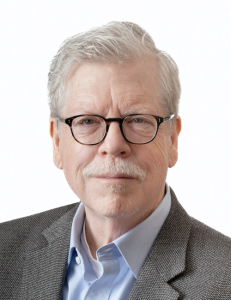
Timothy Clark, PhD
Co-I, Co-Chair, Standards WG University of Virginia
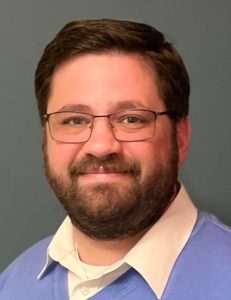
Alex H. Wagner, PhD
Co-PI, Co-Lead Nationwide Children’s Hospital
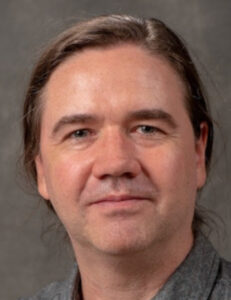
Christopher G. Chute, MD, DrPH
Co-PI, Co-Lead John Hopkins University
Harry Caufield, PhD
Co-I, Co-Lead Lawrence Berkeley National Laboratory
Christopher J. Mungall, PhD
Co-PI, Co-Lead Lawrence Berkeley National Laboratory
Milen Nikolov, PhD
Co-I, Co-Lead Sage Bionetworks
Justin Reese, PhD
Co-I Lawrence Berkeley National Laboratory
Sek Won Kong, MD
Co-I Boston Children’s Hospital
Vikram Adithya Ganesh, MS, PMP
Project Manager University of Colorado Anschutz Medical Campus
Nomi L. Harris, MS
Project Manager Lawrence Berkeley National Laboratory
Amy Heiser, MS
Project Manager Sage Bionetworks
Jessica Mitchell, MS
Project Manager Johns Hopkins University
Orion Banks, PhD
Senior Biomedical Data Manager Sage Bionetworks
Jennifer Bowser, MS
Software Developer Nationwide Children’s Hospital
Matthew Cannon, PhD
Software Developer Nationwide Children’s Hospital
Sigfried Gold, PhD
Software Developer Johns Hopkins University
Nick Grosenbacher, BS
Software Developer Sage Bionetworks
Jay Hodgson, BS
Manager of Web Engineering Sage Bionetworks
Marcin P. Joachimiak, PhD
Data Scientist Lawrence Berkeley National Laboratory
Kori Kuzma, BS
Software Developer Nationwide Children’s Hospital
Maxwell Adam Levinson, BS
Software Developer, GC Representative, Functional Genomics (CM4AI) University of Virginia
In-Hee Lee, PhD
Software Developer Boston Children’s Hospital
Sadnan Al Manir, PhD
Software Developer, GC Representative, Functional Genomics (CM4AI) University of Virginia
Justin Niestroy, MS
Software Developer University of Virginia
Ann Novakowski, MPH
Team Science Governance Advisor Sage Bionetworks
Xin Yuan, MD, PhD
NIH Project Scientist National Institutes of Health
Katie Perry, BA (Formerly Katie Stahl)
Software Developer Nationwide Children’s Hospital
Grace Peng, PhD
NIH Program Officer National Institutes of Health
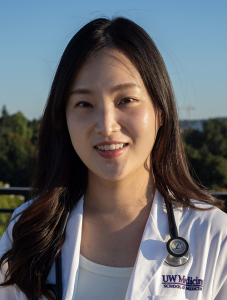
Nayoon Kim, BS
GC Representative, Salutogenesis (AI-READI) University of Washington
Julia Owen, PhD
GC Representative, Salutogenesis (AI-READI) Washington University in St. Louis
Bhavesh Patel, PhD
GC Representative, Salutogenesis (AI-READI) California Medical Innovations Institute
Jamie Shaffer, MS
GC Representative, Salutogenesis (AI-READI) University of Washington
Jake Y. Chen, PhD
GC Representative, Functional Genomics (CM4AI) University of Alabama Birmingham
Gari Clifford, DPhil
GC Representative, Clinical Care (CHoRUS) Emory University
Edilberto Amorim, MD
GC Representative, Clinical Care (CHoRUS) University of California, San Francisco
Manlik Kwong, BS
GC Representative, Clinical Care (CHoRUS) Tufts University
Satrajit Ghosh, PhD
GC Representative, Precision Public Health (Voice) Massachusetts Institute of Technology
Evan Ng, BS
GC Representative, Precision Public Health (Voice) Sickkids Hospital
Jordan Wilke, MEng
GC Representative, Precision Public Health (Voice) Massachusetts Institute of Technology
Camille Nebeker, EdD
Bridge Center, Ethics Working Group University of California, San Diego
We use cookies to analyse our traffic. By clicking “Accept All Cookies”, you are agreeing to Bridge2AI and our partners' use of cookies.